






The Pathologist’s New Perspective: Why Your Health Depends on Moving Beyond the Eyepiece
For decades, the image of a pathologist has been defined by a single, iconic posture: hunched over a binocular microscope, neck craned, eyes pressed against the eyepiece, and fingers poised on a stage knob. It is a silhouette of deep focus and dedication, but it is also one of physical sacrifice. While the medical community celebrates the life-saving diagnostics delivered from the lab, the people behind those results are often suffering in silence.
At MedPrime Technologies, we believe that the next great breakthrough in pathology isn’t just a new stain or a more powerful lens—it is the liberation of the pathologist from the physical constraints of the traditional microscope. By transitioning to a digital workflow, we aren’t just updating technology; we are protecting the most valuable asset in the lab: the human expert.
The Invisible Burden
The reality of a modern pathology lab is physically grueling. The average pathologist spends between six and eight hours every day peering through an eyepiece. While this might seem like a passive activity, it is actually a high-performance physical task that requires the body to remain perfectly still in a highly unnatural position.
The Toll of the Static Posture
Sitting at a microscope locks your body into a damaging pose. Your neck tilts, your shoulders tense to steady your head, and your lower back bears the weight of a constant forward hunch. What begins as a dull ache at the end of the day can easily evolve into a career-threatening musculoskeletal disorder. Conditions like cervical spondylosis and disc herniation aren’t just textbook terms; they are the painful, lived reality for thousands of specialists who spend their lives behind the lens.
The Culture of the Badge of Honor
Perhaps the most dangerous part of this health crisis is the culture surrounding it. In many labs, pathologist burnout physical health is ignored because silently enduring the physical rigors of the lab is considered a badge of honor.
However, this stoicism has a high price. Chronic pain leads to fatigue, and fatigue is the enemy of accuracy. When we talk about occupational health pathology lab standards, we are talking about more than just comfort—we are talking about the sustainability of the diagnostic profession itself.
The Digital Revolution: Thinking Outside the Eyepiece
The shift from a monitor vs microscope pathologist workflow is more than a change in hardware; it is a fundamental shift in how a pathologist interacts with their work.
The core problem with a traditional microscope is that the user must adapt to the machine. You must bring your eyes to the eyepieces, regardless of your height or build. Digital pathology flips this relationship. By using WSI workstation ergonomics (Whole Slide Imaging), the image is brought to you.
When you view a slide on a high-definition digital screen, you are no longer tethered. You can sit upright, move your head, and lean back. You can even stand up. This freedom of movement is the foundation of true ergonomics. It allows the muscles in the neck and shoulders to relax, significantly reducing the risk of long-term injury.
Protecting the Eyes
It’s not just the back and neck that suffer; the eyes are under constant strain. Looking through a microscope forces the eyes to maintain a constant, rigid focus, which can lead to accommodation spasms and severe headaches.
MedPrime’s Cilika: Built for the Human, Not Just the Slide
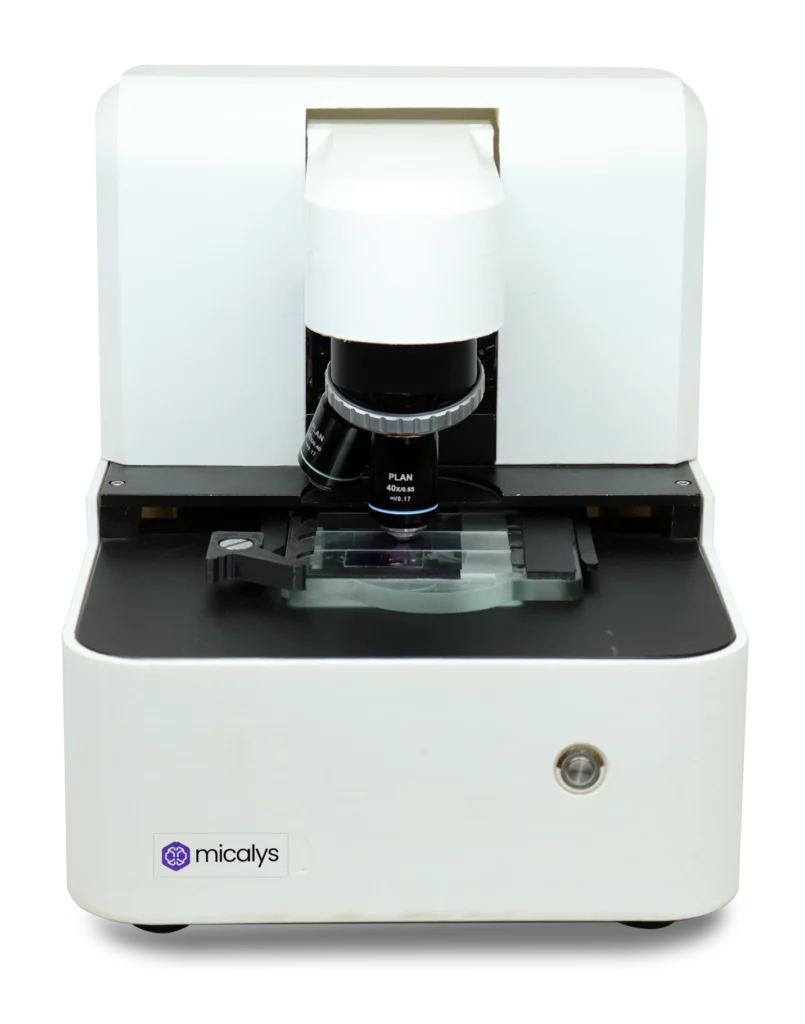
At MedPrime Technologies, we didn’t just want to build another microscope; we wanted to build a better way to work. Our Cilika series is designed specifically to address the pathologist burnout physical health crisis.
A View Without the Strain
By removing the eyepieces entirely, Cilika microscopes transform the diagnostic process. The live specimen is projected onto a tablet or a large 4K monitor, allowing for a heads-up posture. This isn’t just a luxury; it is a vital tool for digital pathology eye strain prevention and spinal health.
Collaboration Made Easy
Traditional microscopy is a solitary experience. To show a colleague a finding, you usually have to swap seats, forcing both of you to readjust your posture. With MedPrime’s digital ecosystem, collaboration is instantaneous. Multiple specialists can view the same high-resolution image on a single screen or across a network, maintaining their ergonomic setup while discussing a complex case.
Creating Your Ideal Diagnostic Sanctuary
Transitioning to a digital lab gives you the opportunity to redesign your workspace as a “sanctuary” rather than just a workstation. Here is how you can optimize your WSI workstation ergonomics:
- The Power of Position
With a digital screen, the top of your screen is at eye level so that your neck remains in a “neutral” position. You should never have to look down at your work; your work should be right in front of you.
- Hands and Wrists
Traditional stage knobs require repetitive, fine-motor movements that can lead to carpal tunnel syndrome. Moving to a digital workflow allows you to use touchscreens. This spreads the physical load across the hand and wrist, reducing the risk of strain.
- The 20-20-20 Rule
Even with the best digital setup, the human body needs movement. We recommend the 20-20-20 rule for all diagnostic sessions: every 20 minutes, look at something 20 feet away for at least 20 seconds. This gives your eye muscles a chance to reset and prevents the “brain fog” that often accompanies long hours of slide review.
Why Hospitals Should Care: The Bottom Line
While the individual pathologist benefits most from ergonomic upgrades, the institution also wins. A lab that prioritizes occupational health pathology lab standards is a more efficient lab.
Retention and Recruitment
The pathology workforce is aging, and burnout is at an all-time high. Providing a modern, ergonomic, digital environment is a powerful tool for retaining senior experts and attracting the next generation of tech-savvy pathologists.
Accuracy and Efficiency
A comfortable pathologist is a focused pathologist. By reducing the physical distraction of chronic pain, labs can see a direct improvement in diagnostic turnaround times and a reduction in the errors that occur when a specialist is physically exhausted. The ROI of a Cilika system isn’t just measured in faster scans; it’s measured in fewer sick days and a healthier, happier team.
The Next Step: Auditing Your Lab’s Health
If you are a pathologist, take a moment to check in with your body. Do your shoulders feel tight? Is there a nagging ache in your neck? These aren’t just part of the job—they are signs that your current setup is failing you.
Transitioning to digital doesn’t have to happen all at once. You can start by introducing a MedPrime Cilika system for second opinions or teaching sessions. Once you experience the “heads-up” difference, the thought of going back to the “hunch” becomes unthinkable.
Quick Checklist for an Ergonomic Lab:
- Posture: Can you sit with your back flat and your neck straight while viewing the image?
- Lighting: Is your room light matched to your screen brightness to prevent glare?
- Movement: Does your desk allow you to switch between sitting and standing throughout the day?
Conclusion
The future of pathology is bright, but it shouldn’t be painful. The move from the binocular microscope to digital displays is a profound act of care for the specialists who keep our healthcare system running. By embracing ergonomics, we aren’t just improving diagnostics; we are honoring the people who perform them.
MedPrime Technologies is proud to be at the forefront of this shift, providing the tools that allow pathologists to see more, do more, and feel better. It’s time to look up from the eyepiece and see the future of your profession.
Is your lab ready for a healthier perspective? Explore the MedPrime Cilika Series today and take the first step toward an ergonomic, digital future.