





Overcoming the Geography of Diagnostics in Rural India
India is a land of profound contrasts, where cutting-edge technology exists alongside age-old challenges. Perhaps nowhere is this more visible than in the healthcare sector. While metropolitan hubs like Mumbai, Delhi, and Bangalore boast world-class medical facilities, nearly 70% of the Indian population continues to reside in rural areas where the medical infrastructure remains sparse. The central challenge is not always a lack of desire for care, but the sheer physical distance between the patient and the specialist. This is the geography of diagnostics, a barrier that has long kept rural diagnostics in India from reaching its full potential.
Until recently, a patient in a remote village requiring a blood smear analysis or a biopsy review faced a daunting logistics chain. Samples had to be transported across hundreds of kilometers, often compromising sample integrity, or the patient had to travel days to reach a city-based pathologist. However, a technological shift is occurring. Portable digital microscopy is emerging as the essential bridge, shrinking the distance between rural patients and urban expertise, and ensuring that geography is no longer destiny when it comes to health.
The Diagnostic Divide — Urban Access vs Rural Reality
How Far Does Residents Of Remote Villages Travel for a Specialist Opinion?
For a resident of a tier-3 town or a remote village, the journey for a diagnosis often begins at dawn. To visit a village diagnostic lab that offers more than basic urine or blood sugar tests, many must travel 50 to 100 kilometers. If the local technician is unsure of a slide, that slide must be physically sent to a regional hub. This creates a “diagnostic desert” where the time spent traveling is time lost for treatment. The psychological and financial toll on a family—losing a day’s wages plus the cost of transport—often results in people delaying testing until symptoms become unbearable. This cycle of delay is the primary obstacle for rural diagnostics India today.
The Cost of Delayed Diagnosis in Remote Areas
In pathology, time is the most critical variable. When considering the landscape of rural diagnostics in India, we see a high mortality rate for treatable conditions like malaria, tuberculosis, and certain cancers simply because the turnaround time for lab results is too long. When a diagnosis takes a week to return from a city lab, a patient’s condition can deteriorate beyond the point of simple intervention. Improving the state of remote pathology isn’t just about convenience; it is about saving lives through early detection and rapid response. The cost of delay is not just measured in rupees, but in lives lost to preventable progression of disease.
What Is Portable Digital Microscopy?
How It Differs from Traditional Lab Microscopes
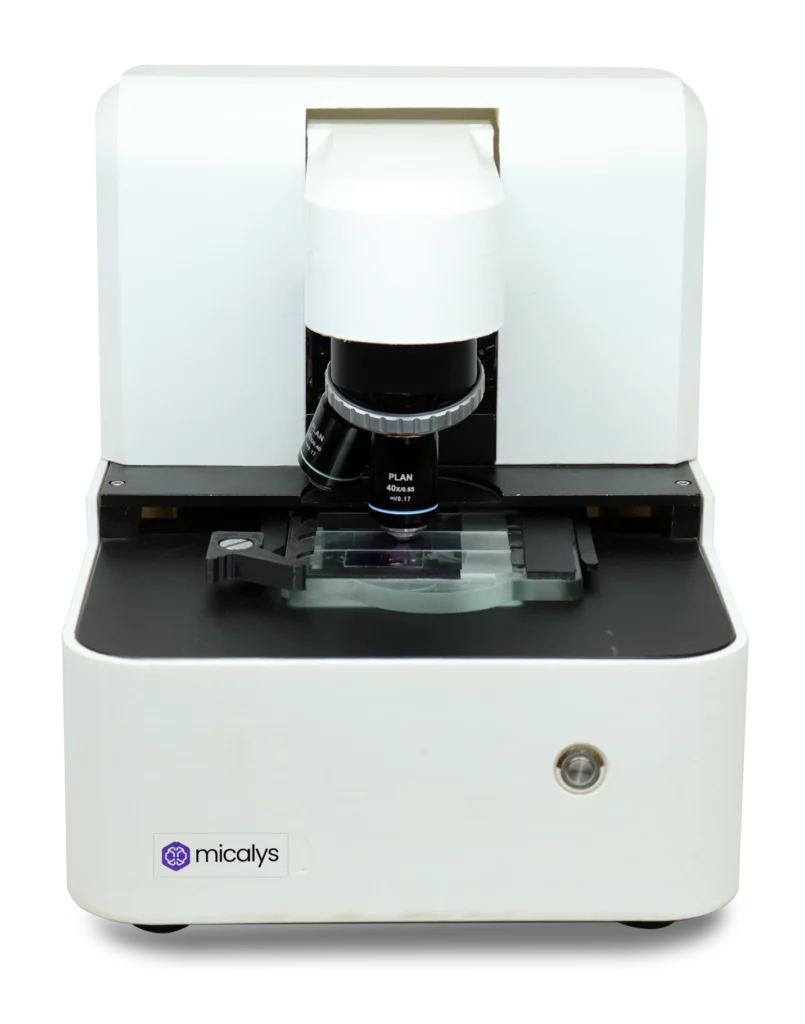
Traditional microscopes are heavy, fragile, and stationary. They require a trained pathologist to sit at the eyepiece to interpret what they see. In contrast, portable digital microscopy reimagines the instrument for the 21st century. These devices are lightweight, rugged, and equipped with high-resolution imaging sensors. Instead of looking through an eyepiece, the user views a crystal-clear image on a screen. Because the data is digital from the moment of capture, it can be stored, enhanced, and—most importantly—transmitted instantly over the internet. This shift from physical to digital is what makes modern rural diagnostics in India possible.
How Village Labs Can Now Access City-Based Specialists Instantly
The true power of this technology lies in its connectivity. Through telemedicine diagnostics, a technician at a village diagnostic lab can capture a high-definition scan of a slide and upload it to a cloud-based platform. Within minutes, a specialist in a metropolitan hospital can log in, review the slide, and provide an expert opinion. This eliminates the need for physical slide transport and brings the expertise of a world-class pathologist to the doorstep of the rural patient. It effectively decentralizes expertise, moving it from a single room in a city to any point on the map.
The Social Impact of Medprime’s Innovation in Rural Diagnostics India
Real Stories from Rural Diagnostic Centers
The implementation of Medprime’s digital solutions has already begun transforming communities. In several pilot regions, we have seen local clinics that previously only offered basic screenings evolve into comprehensive diagnostic hubs. By utilizing portable digital microscopy, these centers have reduced the turnaround time for critical reports from 72 hours to less than two hours. This immediacy allows doctors to start treatment during the patient’s first visit, drastically increasing the likelihood of successful outcomes and building trust in rural diagnostics.
Speed, Accuracy, and Affordability in One Device
Efficiency in rural diagnostics is often a trade-off between cost and quality. However, digital systems level the playing field. By reducing the overhead costs associated with logistics and sample degradation, Medprime enables local labs to offer high-end diagnostic services at a fraction of the price of city labs. The accuracy is further bolstered by digital tools that allow for precise measurements and detailed imaging, ensuring that the specialist engaged in remote pathology has all the visual data they need for a confident diagnosis.
Enabling Local Technicians and Health Workers
Beyond the patient, there is a significant impact on the workforce. Many village diagnostic lab facilities are staffed by hard-working local technicians and health workers who are the backbone of rural healthcare. Portable digital tools empower these professionals by giving them a direct line to expert mentors. It democratizes medical knowledge, allowing a technician in a small village to handle complex cases with the support of a digital network, thereby elevating the entire standard of care in the community.
Telemedicine + Microscopy: The Future of Rural Healthcare
How Remote Expert Review Works
The workflow for remote pathology is designed for simplicity and reliability. Once the slide is prepared, the digital microscope captures the field of view. The software then facilitates telemedicine diagnostics, allowing for real-time collaboration. A pathologist can review the pre-captured high-resolution images at their convenience from any location. This review model means a single specialist can support dozens of rural clinics across a wide geographic area, maximizing the reach of every expert available.
Integration with Government Health Schemes
The future of rural diagnostics in India depends on scalability and integration with national health initiatives like Ayushman Bharat. Digital microscopy is perfectly positioned to fit into the government’s digital health stack. By providing a digitized record of every diagnosis, these tools ensure transparency, facilitate longitudinal patient tracking, and allow for better monitoring of disease outbreaks in remote regions. As the government continues to invest in last-mile connectivity, the digital lab will become the standard, not the exception.
Conclusion
Overcoming the geography of diagnostics is one of the most significant hurdles in achieving health equity for India. For too long, the quality of your healthcare was determined by your proximity to a city. By leveraging portable digital microscopy and robust telemedicine diagnostics, we are finally dismantling those barriers. The vision of Medprime Technologies is a pan-India network where every village diagnostic lab is a gateway to world-class expertise.
We are moving toward a future where a child in a remote corner of Rajasthan or a farmer in the hills of Kerala has the same diagnostic certainty as someone living next door to a premier hospital. By focusing on the unique needs of patients in rural India, we are ensuring that the technology is not just innovative, but impactful. The technology is here; the transformation has begun; and the distance is finally closing.