





The Virtual Lab: Reimagining Diagnostic Workflows for a Decentralised World
Nearly 70% of India’s population lives in rural areas, yet advanced pathology labs and diagnostic expertise remain clustered within tier-1 city-based corporate hubs. This geographic disparity leaves millions dependent on fragmented local collection centres, facing severe delays in securing critical reports. When a patient in a remote village requires an urgent histopathology evaluation, their sample often travels hundreds of kilometres, risking degradation and logistical bottlenecks before reaching a professional.
To bridge this healthcare divide, the industry is witnessing the emergence of the modern virtual lab framework, leveraging digital pathology to establish a decentralised workflow. By transitioning from physical slide transportation to instant digital transmission, an advanced decentralised lab acts as the ultimate geographic equaliser. This virtual model decouples the patient’s location from the specialist, ensuring that top-tier diagnostic insights reach underserved communities across India.
Why the Traditional Lab Model Is Being Disrupted
Geographic Concentration of Diagnostic Expertise
The conventional clinical pathology practice relies on a centralized infrastructure. Physical tissue samples, smears, and biopsies are collected locally and transported to a central hub where equipment and pathologists are stationed. This structural dependence creates vulnerabilities, as expertise remains restricted to urban centers while peripheral communities lack access to immediate, life-saving interpretations.
Impact of Delayed Diagnosis on Treatment Outcomes
When glass slides are couriered across districts, the human cost is measured in delayed diagnoses. For oncology, a delay of even a few days can allow a tumor to progress, complicating therapeutic interventions. In critical care, waiting for a centralized report delays clinical decision-making, compromising patient survival and leading to poorer overall outcomes.
Rising Demand for Faster Turnaround Times
Modern clinical practice no longer tolerates multi-week windows for critical lab results. Clinicians and patients demand rapid, actionable insights to guide surgical plans. As precision medicine advances, diagnostic workflows must evolve to support rapid turnaround times without sacrificing accuracy.
Biopsy TAT Benchmarks and Patient Anxiety
The standard benchmark for tissue biopsy turnaround time (TAT) in conventional models ranges from 5 to 10 working days, largely due to transit and backlogs. This window creates immense psychological anxiety. By implementing a high-throughput virtual lab architecture, facilities can compress this time to under 48 hours, eliminating transport delays entirely.
The Three Pillars — Patient, Technician, Pathologist
The Patient’s Journey in a Decentralised Model
In a virtual framework, the patient experience is localized and efficient. Rather than traveling to major cities, the patient visits a local, community-accessible clinic or satellite sample collection facility.
Sample Collection Protocols at Satellite Centres
To maintain accuracy within a decentralised workflow, satellite centres follow standardized protocols. Technicians utilize software-guided workflows for sample accessioning and identification, logging every step into cloud platforms to ensure complete traceability.
Cold Chain & Sample Integrity in Remote Settings
Maintaining integrity during transit requires robust thermal management. Satellite labs utilize intelligent, temperature-monitored cold chain logistics to prevent degradation. IoT sensors monitor container temperatures continuously, ensuring specimens arrive at the desk in pristine condition.
The Lab Technician as the Remote Operator
The role of the technician evolves from a bench assistant into a skilled operator of digital imaging systems.
Automated Slide Preparation & Scanning Workflow
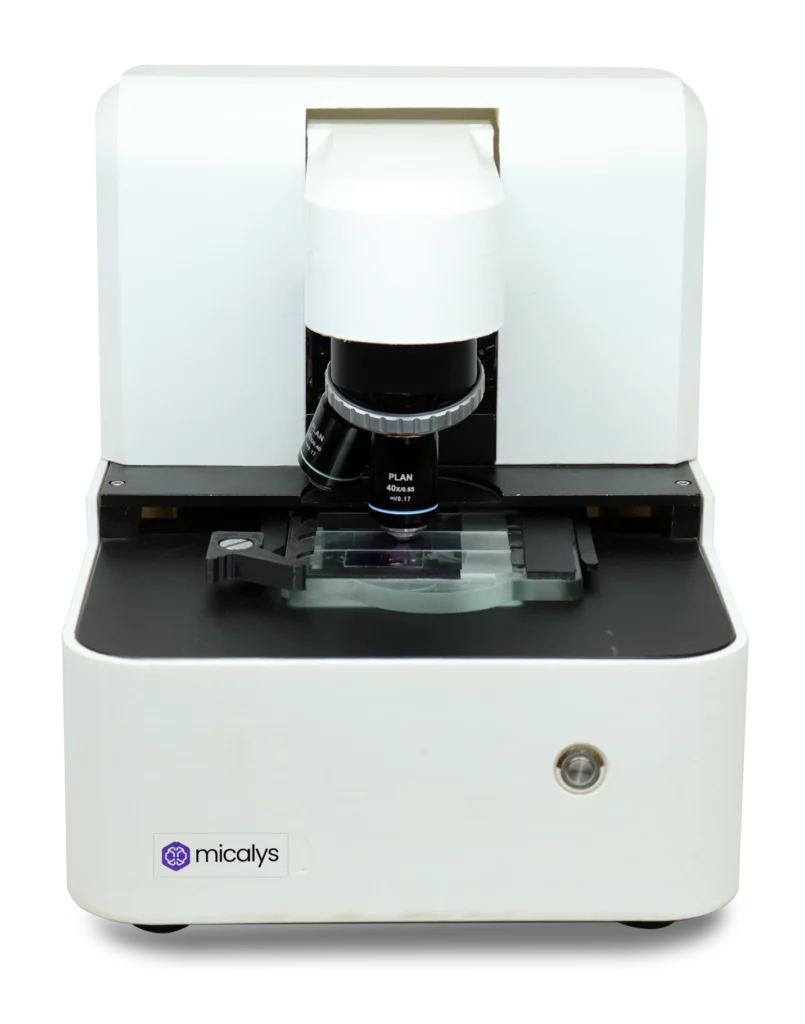
Once the local lab technician performs microtome sectioning and staining, the slide is placed into a high-resolution scanner. It captures ultra-high-definition whole slide images (WSI), converting physical biology into a navigable digital asset within minutes.
QC Checks Before and After Scanning
To guarantee the virtual lab receives high-fidelity images, technicians perform strict QC checks. Slides are inspected for air bubbles or uneven staining before scanning. Post-scan, the operator reviews files to ensure they are optimized for specialist evaluation.
The Pathologist as the Digital Diagnostician
The pathologist is liberated from the physical constraints of the laboratory bench and the traditional optical microscope.
Asynchronous & Synchronous Remote Sign-Out
Operating through a secure virtual lab portal, the specialist performs both asynchronous and synchronous sign-outs. In asynchronous mode, they access cases via a cloud pathology platform India at their convenience. For time-sensitive scenarios—such as intraoperative frozen sections—the pathologist conducts a live, synchronous session to guide surgical decisions instantly.
Subspecialist Access via Remote Second Opinions
One of the most transformative advantages of digital pathology is the availability of niche expertise. If a generalist encounters a rare case, they can share the digital slide with a world-renowned expert virtually, bringing elite expertise directly to the patient’s local environment.
Technology Infrastructure That Makes the Virtual Lab Possible
Scanners, Servers & Secure Networks — The Backbone
A scalable virtual lab requires a reliable infrastructure supporting high-speed data capture and secure cloud dissemination.
Slide Scanner Selection Criteria for Remote Labs
When selecting slide scanners for a decentralised lab network, operational leaders must evaluate metrics beyond simple image resolution. Key criteria include robust mechanical reliability, ease of calibration for remote operators, automated tissue detection, and an optimized price-to-performance ratio suited for distributed deployment. Furthermore, scanners must support flexible magnification levels based on the specific diagnostic requirement; for instance, hematology or microbiology slides often necessitate a 100x objective, whereas standard histology may only require 40x. Equally critical is throughput—operational leaders must assess slide loading capacity and the exact time-per-slide scan rate to ensure the system can effectively manage the lab’s daily volume without creating processing bottlenecks.
The Indian Opportunity — Decentralisation as Strategy
Hub-and-Spoke Laboratory Models for Rural India
The optimal framework for India is the hub and spoke model. Satellite centers (the spokes) perform local digitization, while experts (the hub) review cases digitally from anywhere.
Cost per Test — Hub-and-Spoke vs Centralised Models
Traditional lab models incur significant logistics costs and real estate overheads. Transitioning to a virtual hub-and-spoke architecture reduces overhead. By eliminating physical transport and maximizing pathologist productivity, the cost per test drops, allowing for affordable services for rural patients.
Key Questions Before Setting Up Your Virtual Lab
Leaders must address: Is our internet bandwidth optimized for multi-gigabyte files? Are technicians trained on standardized protocols? Is our pathology platform compatible with our existing LIS? How will we manage long-term cloud storage?
How MedPrime Enables Decentralised Diagnostic Infrastructure
Medprime Technologies offers a comprehensive ecosystem of digital pathology solutions. Through our Cilika series and cloud-integrated platforms, Medprime enables labs to transition into high-performance virtual entities. Our technology ensures secure case routing and connectivity with top-tier specialists through virtual setups.
Next Steps — Plan Your Virtual Lab Transition
Begin by auditing current physical sample volumes and tracking turnaround bottlenecks. Identify key satellite spokes and partner with a pioneer like Medprime Technologies to implement scalable, cloud-native decentralised workflow solutions.
The future of medical diagnostics belongs to the virtual lab. The traditional model of restricting expertise to centralized city centers is unsustainable. Embracing a decentralised workflow allows labs to break geographic barriers, optimize resource utilization, and improve patient outcomes.
Are you ready to revolutionize your diagnostic reach? Partner with Medprime Technologies today to design a high-throughput virtual lab infrastructure. Contact our specialist team to schedule a demonstration and begin your digital transformation.