






Pivot!! A Crucial Step of the Startup Journey
In the high-stakes world of entrepreneurship, there is a fine line between persistence and stubbornness.
Data suggests that over 90% of startups fail, often because they exhaust their resources chasing a product-market fit that simply doesn’t exist. The difference between those that vanish and those that become industry leaders is often the startup pivot strategy. A pivot isn’t a failure; it’s a strategic redirection based on real-world evidence.
At Medprime Technologies, our journey wasn’t a straight line from idea to success. It was a winding path defined by a massive shift in direction. We began with a specific problem in infusion monitoring, but later discovered a much larger crisis in the global diagnostic landscape. Today, Medprime is synonymous with digital microscopy in India, but to get here, we had to master the art of the pivot. This is the MedPrime story—a testament to why staying agile is the most important skill for any founder.
What Is a Startup Pivot and Why Does It Matter?
A pivot occurs when a company shifts its business strategy to accommodate changes in the market, customer preferences, or technology. It’s not about changing the company’s vision, but rather the method used to achieve that vision.
The Fear of Pivoting — and the Cost of Staying Put
Founders often fall in love with their original idea. This founder bias creates a fear that pivoting is an admission of defeat. However, the cost of staying put is far higher: terminal burnout and bankruptcy. A successful startup pivot strategy requires the humility to accept that your first hypothesis might have been wrong, but your team’s ability to solve problems remains right.
Signals That Tell You It’s Time to Pivot
How do you know when to change course? Common signals include:
- Lack of scalable product pipeline
- High manufacturing costs that make the unit economics unsustainable
- Customer interest in theory but not converting to sales
- Stagnant user growth despite heavy marketing
- Customers using only one small feature of a complex product
- A solution-in-search-of-a-problem scenario where the tech is great, but the market need is low
Medprime’s Story — From InfuCheck to a Broader Vision
The Original Vision: What Was InfuCheck?
When Medprime was founded by a team of graduates from IIT Bombay, our first flagship product was InfuCheck. It was a low-cost, electronic sensor designed to monitor the flow of intravenous (IV) fluids. The goal was to prevent complications like fluid overload or blood backflow in hospitals where nursing staff were stretched thin. While the technology was sound, the market response taught us a valuable lesson about must-have vs. good-to-have innovations.
The Turning Point — What Triggered the Pivot?
- Despite the technical success of InfuCheck, market adoption remained sluggish. We realized that while IV monitoring helped, it wasn’t solving a hospital’s most critical pain point. We were actively on the lookout for a product better suited to the urgent needs of the Indian healthcare market.
How the Team Made the Transition
- The solution didn’t come from a marketing brainstorm, but from a technical foundation. Samrat, Medprime’s CEO, had developed a basic imaging system prototype as part of a project at IIT Bombay. When we showed this early version to doctors, the feedback was enlightening. They didn’t just see a microscope; they saw a solution to their daily workflows, telling us they needed this technology for a wide range of diagnostic tasks that traditional microscopes couldn’t handle.
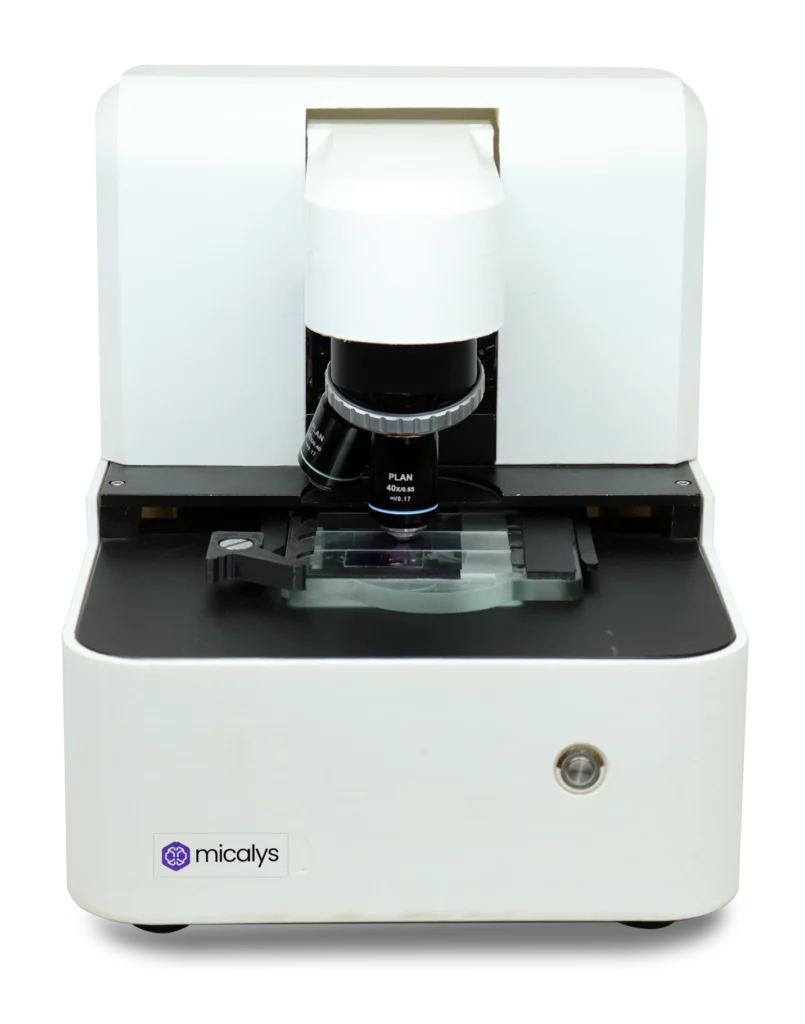
- The transition focused on evolving this IITB project into a market-ready tool. Based on direct requests and feedback from these doctors, we moved beyond the basic prototype to develop a robust, high-resolution digital microscope. We refined the ergonomics and integrated telepathology features, allowing a doctor sitting in a metro city to diagnose a patient in a remote village instantly. This iterative development, driven by the medical community’s needs, was the birth of the Cilika line of digital microscopes.
Lessons from the Medprime Pivot for Healthtech Founders
- The MedPrime pivot story offers three critical lessons for any entrepreneur navigating the complex waters of healthcare technology.
1 — Customer Feedback Over Founder Bias
- We stopped trying to convince hospitals they needed InfuCheck and started listening to what they actually required. The doctors who interacted with the initial IITB project became our most important advisors. They pointed us away from IV drips and toward the diagnostic crisis. This pivot from a niche sensor to a systemic diagnostic tool proves that listening to the market is the foundation of any effective startup pivot strategy.
2 — Preserve Core Tech, Change the Wrapper
A pivot doesn’t mean throwing everything away. At Medprime, we kept our expertise in optics, sensors, and digital interfaces. We simply applied that core tech to a different segment —moving from IV sensors to digital imaging for microscopes.
3 — Speed of Execution After the Decision
Indecision is a startup killer. We redirected our R&D and manufacturing focus entirely toward microscopy, ensuring we didn’t bleed cash trying to support two different directions at once.
How to Execute a Successful Startup Pivot
Executing a healthtech startup pivot requires a balance of data-driven logic and emotional intelligence.
Validate Before You Commit
Before we fully committed to the pivot from InfuCheck, we built prototypes of the Cilika microscope and took them to pathologists. The turning point came with our first sale—at a stage when the product hadn’t even been commercially manufactured. That early market conviction confirmed we were on the right path.
Communicate the Pivot — Team, Investors, Customers
Transparency is key. We had to explain to our stakeholders and team why the shift was necessary. By showing the massive market potential of digital microscopy compared to IV monitoring, we gained their trust and kept the momentum alive.
Metrics to Track Post-Pivot
After a pivot, your old KPIs (Key Performance Indicators) might be irrelevant. It is crucial to take a step back and re-evaluate your key metrics to match your new business plan.
Conclusion
The MedPrime pivot story is more than just a change in product; it’s a story of growth and resilience. From the initial days of identifying our product focus to becoming a leading medical startup India can be proud of, we learned that a pivot is not a detour—it is the path to the right destination.
For founders, a startup pivot strategy is the ultimate tool for survival. It allows you to stay true to your mission of making an impact while remaining flexible enough to change your methods. Embrace the pivot, listen to your users, and don’t be afraid to leave your original idea behind for a better one.